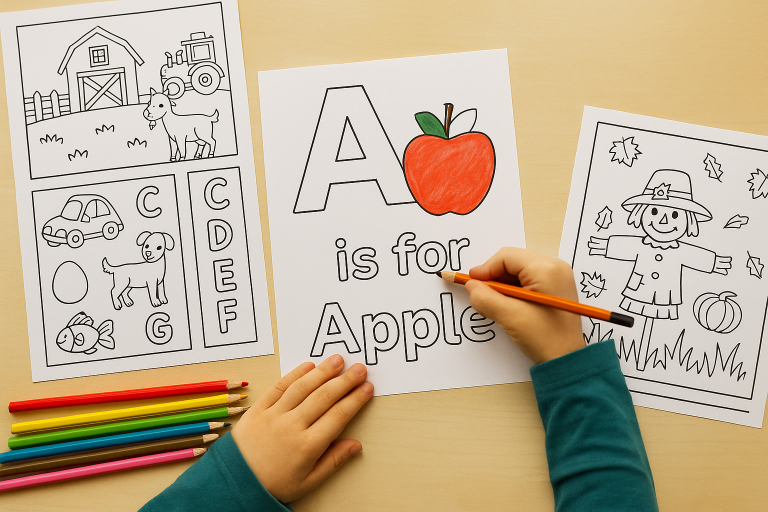
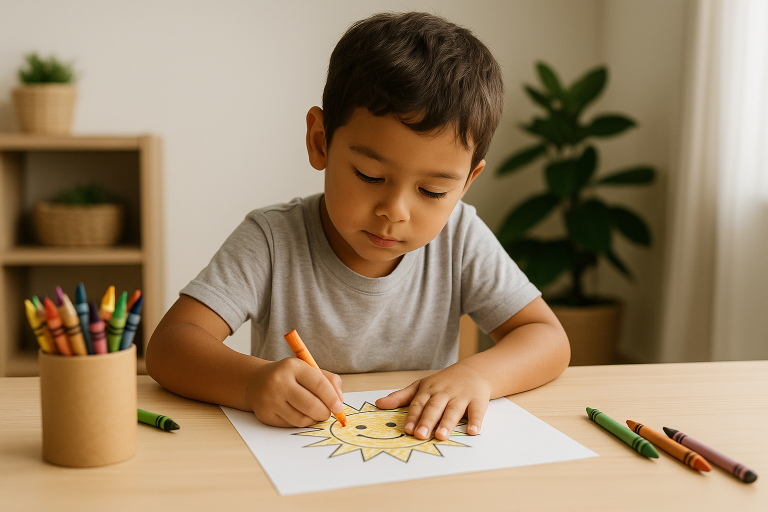
Discover how simple coloring activities build essential hand strength, coordination, and focus for preschool and kindergarten learners.

Have you ever watched a child grip a crayon with intense concentration, tongue poking out just a little, as they carefully stay inside the lines? That moment isn’t just cute — it’s developmental magic in action.
Coloring is more than a fun, quiet-time activity. For kids, it’s a powerful (and often underestimated) tool for building essential fine motor skills — the small, precise muscle movements that help with everything from holding a pencil to buttoning a coat. Whether they’re scribbling freely or focusing hard on a detailed picture, every stroke strengthens the muscles in their hands and fingers, improving dexterity and coordination along the way.
What Are Fine Motor Skills?
Fine motor skills are the small, precise movements we make with the muscles in our hands, fingers, and wrists. They’re what allow a child to grasp a crayon, pinch a snack between their fingers, or turn the pages of a favorite book. While gross motor skills involve big movements like running and jumping, fine motor skills are all about control and coordination on a smaller scale.
For young children, mastering these skills is a huge part of early development. Tasks like buttoning a shirt, zipping up a jacket, brushing teeth, and using utensils at the table all depend on strong fine motor control. In fact, fine motor readiness is a key milestone for preschool and kindergarten — kids who have had plenty of practice with activities like coloring are better prepared to hold pencils correctly, write letters, and manage the everyday tasks that build independence.
How Coloring Pages Help Develop Fine Motor Skills
Coloring pages might seem simple, but they pack a big developmental punch. When kids engage with crayons or markers, they’re building a strong foundation for many essential skills. According to the CDC’s developmental milestones, fine motor skills like drawing and using utensils are key indicators of early childhood growth. Here’s how coloring supports fine motor development:
- Grip Practice
Every time a child picks up a crayon, they’re working the small muscles in their fingers and hands. Learning how to hold a crayon properly builds strength and dexterity — crucial for writing, cutting, and other classroom tasks. - Hand-Eye Coordination
Staying within the lines requires visual attention and careful motion. As kids focus on where their hand is moving in relation to what they see, they develop stronger hand-eye coordination. - Control & Precision
Coloring helps children experiment with how much pressure to use. Pressing hard or soft, coloring in tight spaces, and switching between tools all sharpen their ability to control fine movements. - Bilateral Coordination
Coloring encourages kids to use both hands at once — one to hold the paper steady, the other to color. This type of coordination helps with many real-world activities, from tying shoes to opening containers. - Stamina
The longer kids color, the more they build endurance for other fine motor tasks. Developing stamina is important for writing longer sentences, drawing with detail, and completing classroom activities without fatigue.
Beyond Motor Skills: Extra Benefits of Coloring
While fine motor development is a key benefit of coloring, it’s far from the only one. Coloring also supports broader areas of early childhood growth — especially social-emotional development and cognitive skills.
- Focus & Attention Span
Coloring requires kids to stay engaged with a task from start to finish, helping them build longer attention spans. Even short coloring sessions train their brains to focus on details and follow through. - Self-Expression
The choices children make — what colors to use, how to fill a space — are a form of creative expression. Coloring allows kids to explore preferences, moods, and individuality in a low-pressure way. - Emotional Regulation
The repetitive, gentle act of coloring can have a soothing, meditative effect. It helps children self-soothe, settle after overstimulation, and practice mindfulness, especially in busy or overstimulating environments.
Practical Tips for Parents & Teachers
Supporting fine motor development through coloring is easy with a few simple strategies. Whether at home or in the classroom, these tips can help make the most of coloring time:
- Start with the Right Tools
Chunky crayons or triangular pencils are easier for little hands to grip. As a child’s coordination improves, gradually introduce slimmer writing tools to refine their control. - Introduce a Variety of Materials
Switching between crayons, colored pencils, markers, and even paintbrushes keeps the activity engaging while building different motor skills. Each tool offers unique resistance and requires different pressure and precision. - Follow Their Interests
Kids are more likely to stay engaged when the coloring pages feature things they love — whether it’s puppies, Halloween, or their favorite show. Themed pages can turn coloring into an eagerly anticipated activity. - Focus on Process, Not Perfection
Resist the urge to correct their technique or keep them inside the lines. Instead, praise their effort and creativity. Coloring is about development and exploration, not producing a perfect image. - Incorporate Tracing & Pattern Work
Blend coloring with tracing shapes, letters, or simple patterns to further boost coordination and early writing skills. It’s a gentle bridge between fun and foundational learning.
Activities That Boost Fine Motor Skills Alongside Coloring
Coloring is just one tool in the fine motor skill toolbox — pairing it with other hands-on activities can supercharge development while keeping things fun and varied:
- Cut-and-Paste Crafts
Using safety scissors strengthens hand muscles and coordination. Gluing small pieces also develops precision and planning. Try simple collage projects or themed craft kits. - Dot Markers or Q-Tip Painting
These tools encourage grip control and careful hand movements. Plus, they’re fun and low-mess ways to add variety to art time. - Tracing Shapes, Mazes, or Paths
Tracing builds pencil control and reinforces early writing movements. Simple mazes or path-following activities challenge kids to stay focused and coordinate eye and hand movement. - “Finish the Picture” or Guided Drawing Prompts
These spark creativity while encouraging controlled drawing. Whether it’s adding missing parts to a scene or completing a doodle, these prompts blend imagination with skill-building.
Final Thoughts: Color Your Way to Stronger Skills
Coloring might seem like simple fun — and it is! — but it’s also a powerhouse for developing the fine motor skills kids need for school and everyday independence. With just a crayon and a coloring page, children are strengthening their fingers, practicing coordination, and building focus in a low-pressure, creative way.
If you’re a parent, caregiver, or teacher, make coloring a regular part of your child’s routine. It’s easy to fit into a day, costs next to nothing, and offers developmental benefits that last a lifetime.Looking for a great place to start? Browse our growing Free Coloring Pages Library on ScribbledSprig — packed with seasonal themes, kid-friendly designs, and printable fun for all ages!